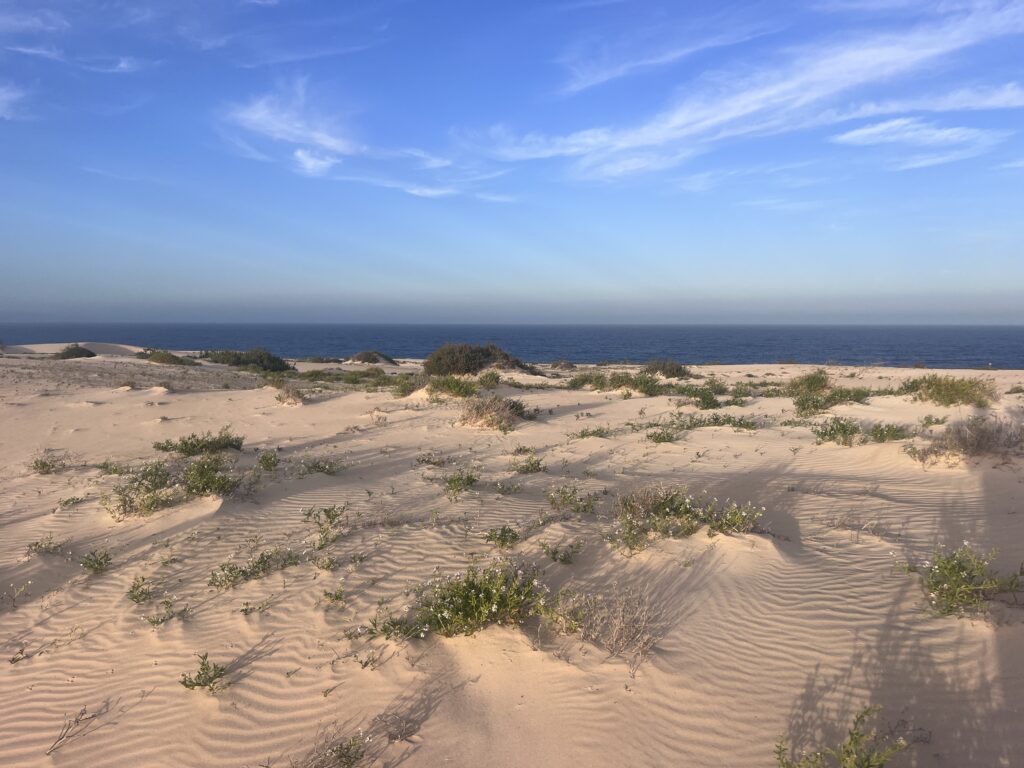
Welcome to my Fuerteventura Travel Guide.
I’ve visited Fuerteventura twice, first in 2022 and again three years later, exploring everything from popular beach resorts to remote villages and hidden beaches.
Before my second visit, I considered Lanzarote my favourite Canary Island. Today, Fuerteventura sits slightly ahead.
At first glance, the island is known for its endless sunshine, spectacular beaches, and world-class surfing. But what makes Fuerteventura special isn’t just the scenery.
Unlike Tenerife or Gran Canaria, which often feel more developed and urban, Fuerteventura still feels wild. Nature seems to set the pace here. The volcanic landscapes, powerful Atlantic Ocean, and constant wind create a place where life feels simpler and slower.
That’s what I love most about the island.
More than anywhere else I’ve visited in the Canaries, Fuerteventura has a way of making time slow down. Locals even have an expression that captures this mindset perfectly: “Disfruta el momento” — enjoy the present moment.
After spending several weeks on the island, I finally started to understand what they mean.
So, sit tight and enjoy the moment while reading my Fuerteventura Travel Guide.
For Who is Fuerteventura not?
In my tittle I said, some people love it and some hate it, while I love it ,some of my friends don’t. Some of the reason are below, so consider visiting Fuerteventura if you:
- Need hustle and bustle of big cities. Even with places like Corralejo, Puerto del Rosario, many people find it just too quiet, limited or boring. If you feel better in urban settings, this island might not be our fit. Try Tenerife or Gran Canaria in that case.
- Need greenery. Apart from scarce of cities, people complain about the lack of trees, forests or plants. While there are some palm tress, truth is the landscape of the island is far from lush of greenery, and if you needed it, choose one of the two islands from above.
- Can’t stand wind. I got used to it, but people who are there first time, mention this as being obstacle for enjoyment. Fuerteventura is the windiest island among the Canaries. And its ever present wind can be a distraction for some. While kite surfers are on hunt for it, regular beach goers, might find it too much. I found it alright after a couple of days. In any case, it’s good to be aware of this phenomenon
- Need top notch infrastructure. While for me it was refreshing to come to the place that feels like 50 years ago, I know many people would not appreciate the facts you can’t pay with card on the bus, buses are late or not coming according to the schedule, missing cities, no bathrooms on majority of the beaches, and so on.
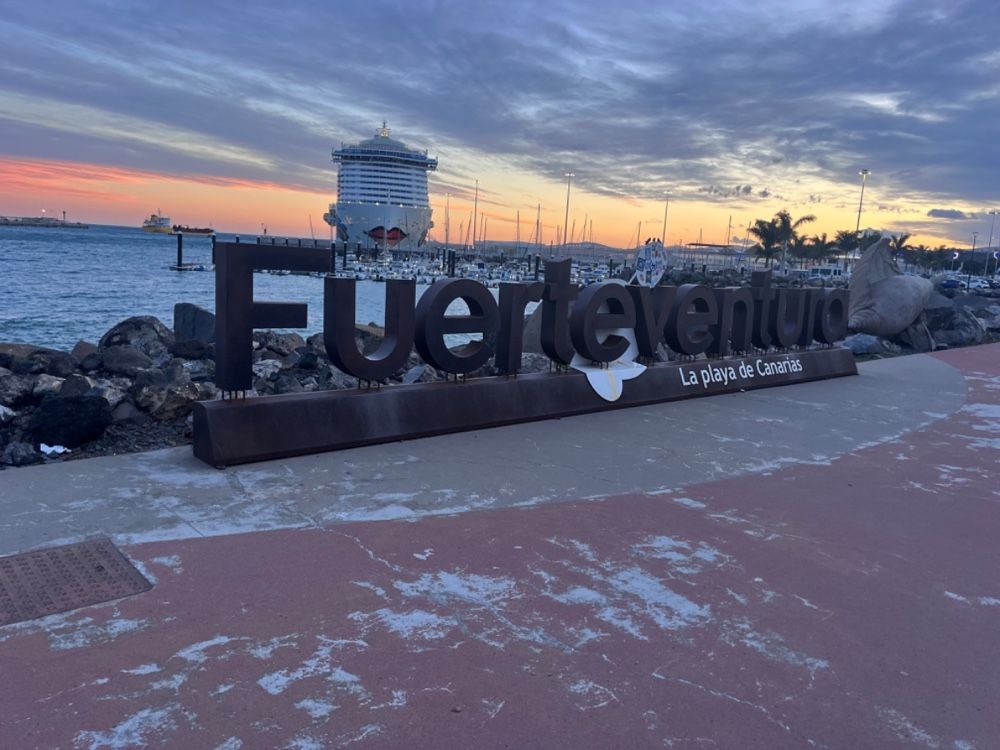
How to get to Fuerteventura?
Plane
If you’re flying in, Fuerteventura Airport, nestled near Puerto del Rosario in El Material, is your gateway. It’s well-connected, with frequent flights from major European cities.
I flew in from Netherlands , Belgium and Germany. All flights are about 4.5 hrs.
Many low cost airlines offer there regular flights, but the offer changes. Do your research prior the departure for the best rates.
Alternative?
Ferries!
They’re the way to go for a more laid-back approach, allowing you to sail into the island from its Canarian neighbors like Lanzarote, Tenerife or Gran Canaria. Just type the route and this site finds the best connection for your trip.
Ports are in Corralejo for departure to Lanzarote, Puerto del Rosario for departure to Tenerife or in Puerto de la Cruz near Morro Jable. departure to for Gran Canaria.
Ferries offer regular services and help kick off your journey with scenic ocean views that set a chill vibe right from the start.
Insider Tip: For the trips between Lanzarote, Fuerteventura and La Graciosa, the best ferry company is local Líneas Marítimas Romero.
Getting Around: Navigating Fuerteventura with Ease
Public transportation is present here, with buses crisscrossing the island. They’re somewhat reliable most of the time, and budget-friendly too, connecting major towns and tourist hotspots.
What you need to be aware of are a few things: A) You can only pay with the cash, so not card payment. Many tourists would struggle to get to the bus without the proper amount of money. I know, you might also not carry cash anymore, but here it’s this, or no bus ride. If you plan staying longer, there is a CARD that you can scan as you go, it offers 10% cheaper rates as a standard ticket. To obtain one, you can buy it with the chauffeur in the bus, again, with the cash only.
B)The buses can be late or don’t go at all. This is especially true on the line between Corralejo and El Cotillo. Compared to Lanzarote or Tenerife, this is a drawback. Always, count on the fact, you might be late wherever you plan to go.
C)Fantastic thing is that the buses have a compartment for a bike! If you intent to explore the island on two wheels, you can cover the long distances with the help of a bus. It is for free.
Renting a car adds that sprinkle of freedom to your itinerary.
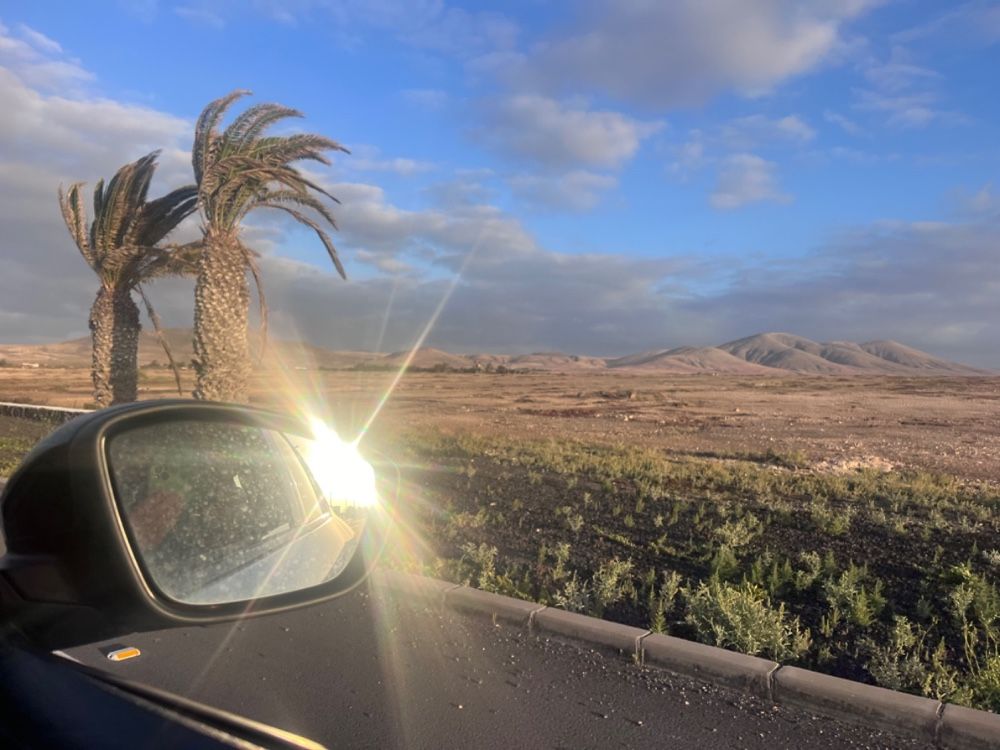
While Cicar and Cabrera Medina were offering by far the best rates, this isn’t the truth anymore.
During my Christmas 2025 visit, I found the best deals with discovercars.com. I think the reason the local rentals are more expensive is their growing popularity. That’s shame.
On the other hand, if you come to the island in the summer, you can have an amazing deals for 14 days, for 100€ with discovercars.com.
If you fancy a slower pace, want to enjoy the fabulous landscapes without the car, maybe renting a bicycle is more suitable. The majority of the main roads in Fuerteventura are in perfect conditions. Making it a blast on the bike.
Terrain is hilly in the middle of the island, but the east coast is quite flat.
Many rental shops offer bikes at day rates, and it’s a great way to tread lightly on this beautiful land. Standard price is 15 € a day, if you rent for more days, price can drop up to 6 € a day (starting from 7 days and more)
Taxis are there when the need for a quick ride and buses aren’t available.
We did that from Las Plajitas to Gran Tarajal. The ride cost was 10€. Also, Corralejo to Lajares was affordable, one way ticket was 15€.
Insider tip: When taking a taxi, do agree on a fare before setting off if a meter isn’t ticking away.In case, you have a little bit of outgoing vibe, try hitch hiking. Especially on the northern route, Corralejo-El Cotillo, locals would pick you up. It might take a while, anything up to one hour. If you are lucky, it could be shorter. I did it once and was picked up by local police man, after approximately 10 minutes. I recommend this because locals do it as well, and you will see it happening along the road, that said, I assume it is safe way of traveling.
Must-See in Fuerteventura
Fuerteventura isn’t just sand and surf—although, those are its trademarks.
When the weather is not the best ,hiking to the closest mountain was my favourite thing to do, while staying there. Literally, everywhere you stay, there are some dead volcanos, or look-alike hills offering the well needed overview and distance.
The island is packed with natural and cultural wonders waiting to be explored. For those craving a natural encounter, Mount Tindaya close to El Cotillo stands tall as a mystical site for the island’s ancient residents. Its striking silhouette against the sky is a sight not to miss.
Some favourite spots of mine in the north: Malpas de la Arena, Volcanos de Bayuyo, Calderon Hondo, Montana Roja.
Below is view from Calderon Hondo towards Bayuyo volcano.
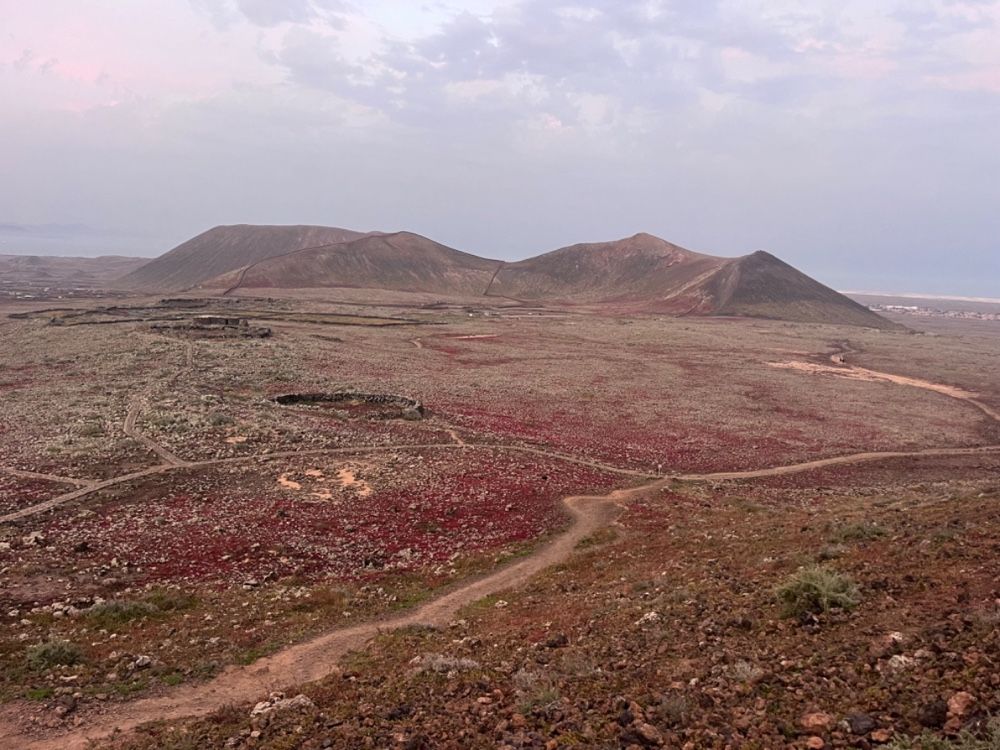
Another spot carved by nature’s hands is Corralejo Natural Park. The vast dunes stretch on forever, leading to beaches where the Atlantic waves crash, creating dramatic scenes. It’s a haven for photographers and nature lovers alike.
Below is the road dividing the dunes of the natural park and the sea. One of my most favourite sceneries in Northern Fuerteventura.
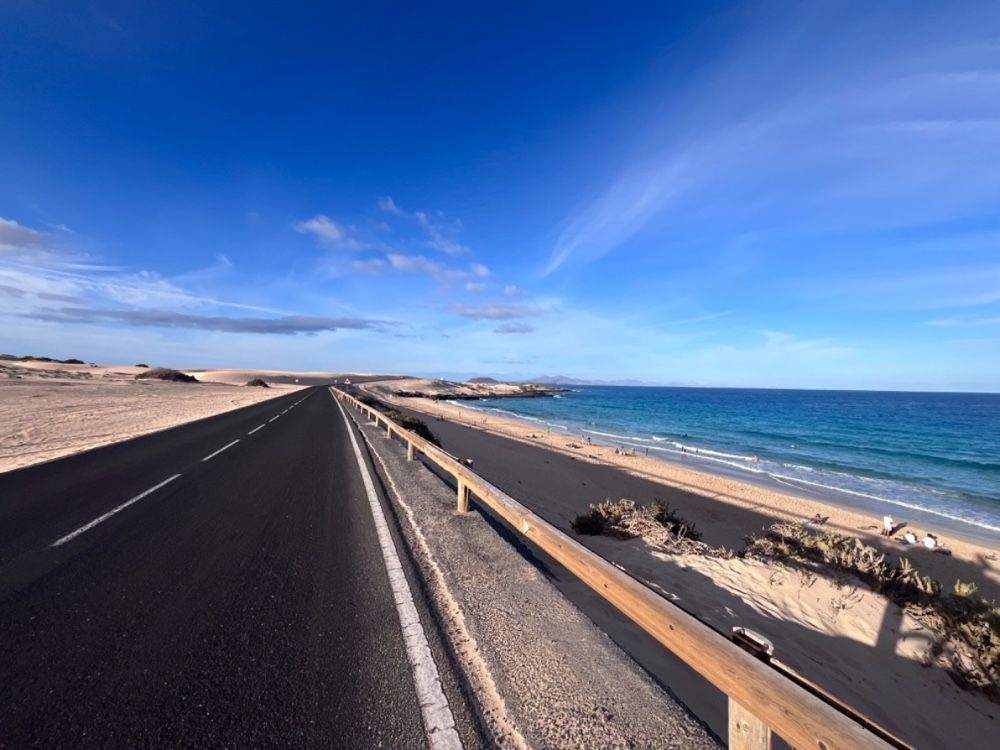
What is perfect about this place is that it can be reached on foot from Corralejo city and it takes over 2 hours to get to the southern part of the Dunes. You are free to choose the beach you want to chill out. And that you have some to choose from. See it in the beach sections.
Then there is Betancuria, the island’s former capital, invites you to step back in time with its well-preserved colonial architecture. When we visited, and did wander its quiet streets, it felt like flipping through a history book.Very small village, with authentic houses and charming vibes.
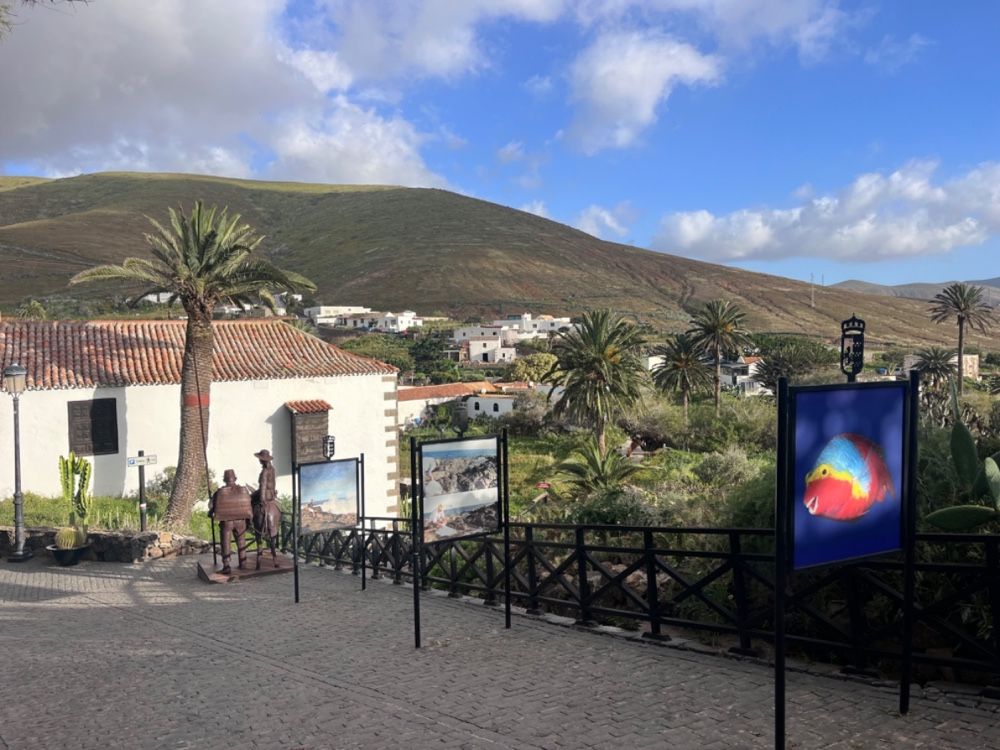
There is a local museum, governmental office, and set pictures reminding the history and presence of the island at the same time. We loved it.
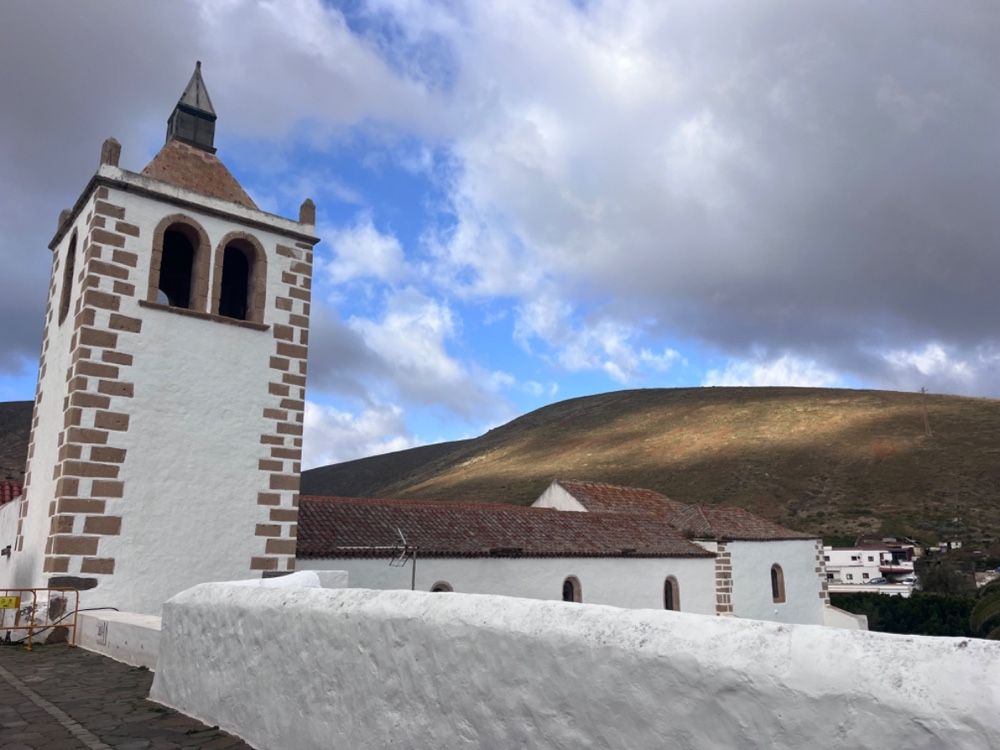
You can reach this place from Puerto del Rosario also by bus. It’s about one hour. It would give you the real, local taste of how the people were living here. From the outside, this village displays a typical outlook of Fuerteventura: big mountains, white stone houses, palm trees and a desert look-like environment.
Insider tip: While Betancuria is worth visiting, it is a bit remotely placed. Especially, if you don’t have a car it can take you hours to reach it. If you are staying in the northern part of the island, and you don’t have the option to travel to the south, or just don’t want to, try villages like La Oliva, or Villaverde for the similar vibe.
Where to eat as a Vegetarian or a Pescatarian in Fuerteventura?
I still don’t eat meat, except for fish. If you are pescatarian as well, here are my recommendations.
It doesn’t come as surprise to me that the best place to try local food is in the heart of Puerto del Rosario. You will find the most variety, and the best ratio of price quality of food. There is a beautiful mix of typically Spanish food, and food influenced by other nationalities. It expresses the multi-cultural vibe of Fuerteventura and Puerto especially. We’ve stayed there a week and it feels like it was too short. The places I have been and would totally recommend are:
- Arepas Llanelas Venezolanas-Venezualan place offering sort of banana burgers. Even, it might sound like a strange combination, you have to try it. It was my first time eating food from Venezuela, and this was an amazing introduction.
- Muelle Viejo (old dock)-the best Tapas we had by far in the entire island. The location is next to a busy road, in the city centre, but if you are not bothered by it, you have to go there. I loved the cod in paprika. Amazingly tender. Their service was also amazing.
- Ciao Mare Pizzeria –Traditional Italian Pizza. Great interior, attentive waiters, and unexpectedly free home-made starter, made this place worth recommending, Also the price is very well set and therefore not expensive at all.
- Cafeteria Nicol(Bar de Tere)– Little hidden gem close to main bus stop. Super delicious food for affordable prices. I went multiple times and the change the menu regularly, but always deliciously fresh. I had fish of the day, seafood paella, or tapas, and it was always delight. If you are into the local atmosphere and/or passing by, you have to stop here.
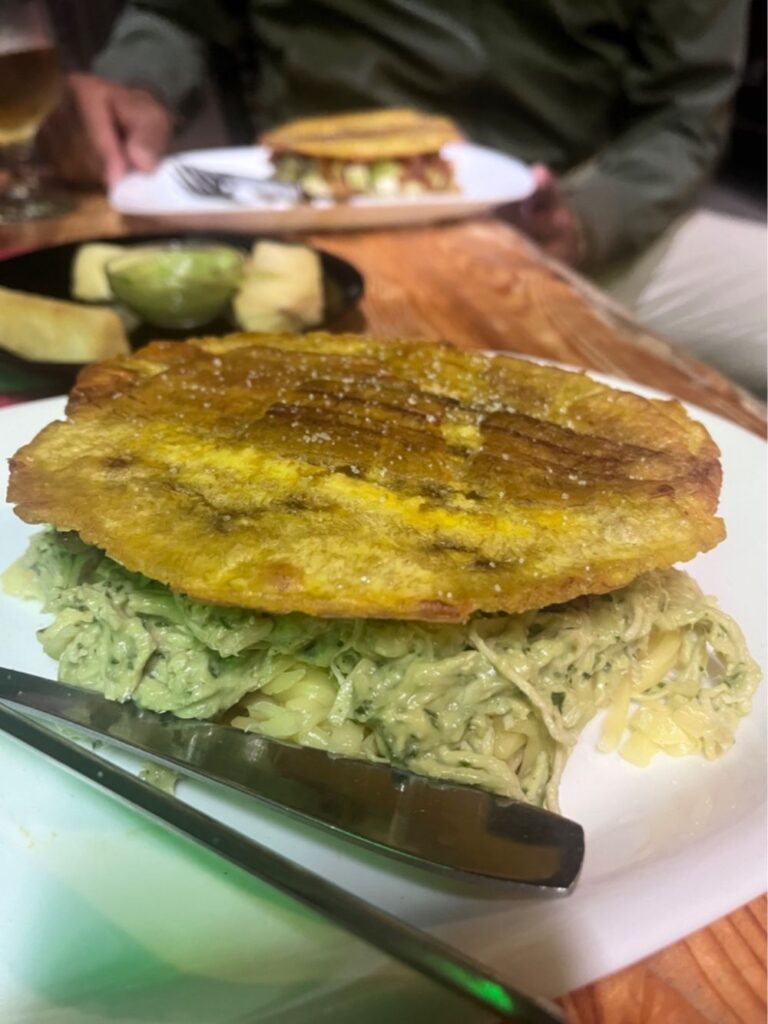
Arepas
Further some places elsewhere on Island that I would recommend:
- Teleclub Piscolabis(Puerto Lajas)- Local Fish, update. As of April 2026 this place changed owner, and it is not teleclub anymore, and the quality went down as well.
- Hamburguesería Single Fin (Corralejo) Best Veggie Burger on the island
- Restaurante Acorralado (El Cotillo) Tapas
- Panaderia Mi Dulce Hogar (Villaverde) –Best Bocadillo Sandwiches on the island.
For further info about recommendations see this post. (link)
What I missed in Fuerteventura, are teleclubs and wineries.Comapre to Lanzarote, there are only 3 active teleclubs.
Fuerteventura Travel Guide: Where to stay in Fuerteventura?
Because of its huge size, you want to choose carefully when it comes to where to stay during your holiday. I have visited 5 places in Fuerteventura and all of them have something worth visiting.
In case you want to be centrally located to explore the island, in the centre of the vibrant life , or in the remote villages, my Fuerteventura travel guide will show you all.
Puerto del Rosario, Fuerteventura’s bustling capital, is the heart of Island action, culture, and local food. Centrally located, it’s the best place if you want to discover the rest of the island and you don’t want to be too far. The highlights of the Island can be reached with the bus as well. Some distances of the bus:
The bus to El Cotillo is 1 hour, to Corralejo 30 minutes, to Sotavento beach 1.5 hrs.
With street art brightening its avenues and shops catering to every whim, it’s an urban playground that still stays true to its roots. I love the variety of food options the city offers. And even though it’s a city, it isn’t that big to get a headache from the traffic and such. The harbor area is perfect for a leisurely stroll, offering peeks into daily island life. With the city beach providing a nice option to finish your day stroll.
It reminds me a lot of the city beach in Bari. (link)
Secondly, there is Corralejo. City north of the capital is a hub of the north. Favourite for the fun-seekers, wave riders, and remote workers. It’s the epicenter of nightlife on the island. After a day riding the waves at the dunes beaches, the town’s lively clubs and bars come alive, offering music, dance, and drinks that keep the good times rolling.
Below is one of the Corralejo city beaches. Small Popcorn beach.
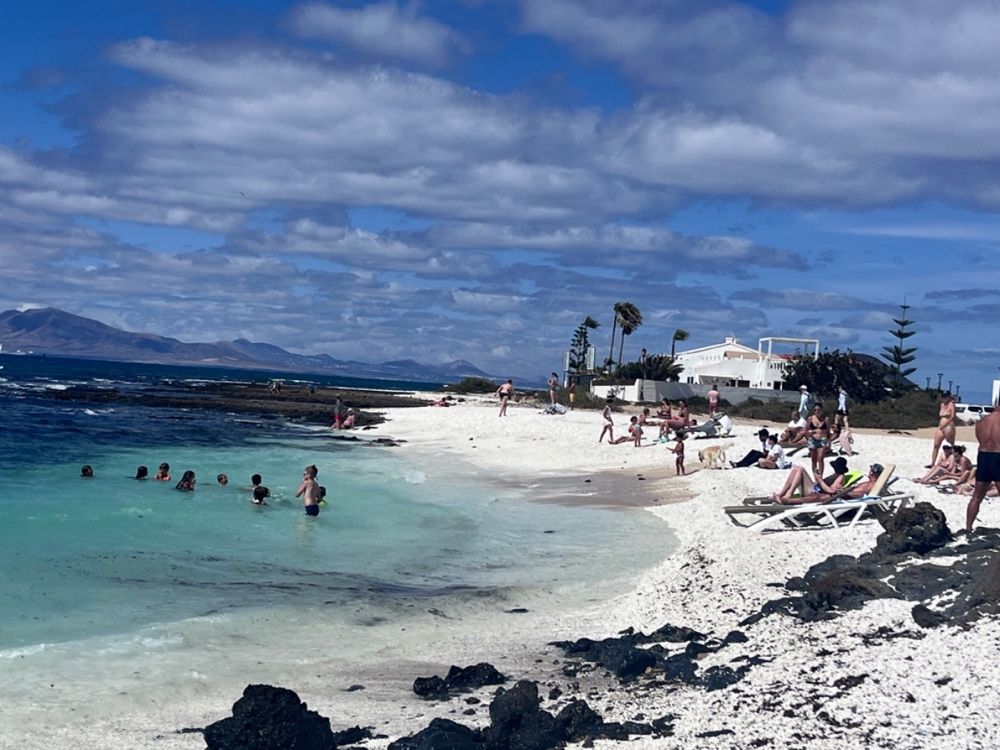
Also, it’s very international, filled with thousands of Digital Nomads. Should you be one as well, and you plan to stay longer, then this is the place to be based. There are plenty of events happening almost daily, a lot of co-working spaces in the entire city and of course, plenty of like-minded people willing to connect.
What is good to know is that the place isn’t only about the nightlife.
If you love tranquillity and want to be alone after the meet ups, work or surf, just outside of the city, there are stretches of sand kilometres long forming the famous Nature Reserve Corralejo Dunes, where you can get easily lost and out of the crowds.
If you fancy something out of ordinary, I would recommend to hike or bike to Calderon Hondo. Inactive volcano, in halfway towards Lajares is spectacular. Offers remote atmosphere, aiming sunsets, and moon like scenery.
Insider tip: if you come across squirrels located near the volcano, please do not feed them. They are cute, so you might be tempted, but they are overpopulated. If we are not careful, one day we might end up having them running in front of the restaurants in the city. I have seen them in the city already.
For serenity, El Cotillo is a tranquil fishing village where time seems to stand still. I fell in love with this place at first sight. Even though the village is small, the coastline is enormous. When you enter the village by bus, you can head to the left, where the surfing sports are, or to the right, where the town centre is, with its small cafes, shops, and tiny harbour. Here are also some of the most mesmerizing sunsets I ever seen in my entire life. This is by far, my most favourite place.
Lastly, there is Morro Jable, down the southern end, offers a more relaxed pace. Known for its picturesque marina and sprawling beaches, it’s a prime spot for unwinding. It is a village built on a small hill, so you’ll have the feeling that everywhere you go, you go up or downhill. If you walk towards Jandia village, you will find hotels with plenty of sport opportunities like beach volley, tennis, mini golf. If you walk into the marina, don’t miss the mirador with the stunning view over the entire coast.
Jandía Natural Park, nearby, is for those who want to lace up their hiking boots for a day of exploration. Be aware that Morro Jable is becoming very popular, and when we were there in 2022 what felt like a quiet village, is slowly turning into a bustling city, comparable to Corralejo.
Then there’s Las Plajitas, a lesser-known haven where you can truly escape the crowds. Hidden away from the main tourist trails, it offers a peek into the authentic, quiet life of Fuerteventura’s countryside. Here, everything runs at a gentle pace.
The beach is covered with black sand, and placed between two mountains , making it an ideal windless spot.
In times when the wind is unbearable on the east coast, this place offers you shelter. Furthermore, there are two restaurants and one big hotel, and almost no people. I loved it here.
Sunset view from La Rampa Restaurante in Las Playitas.
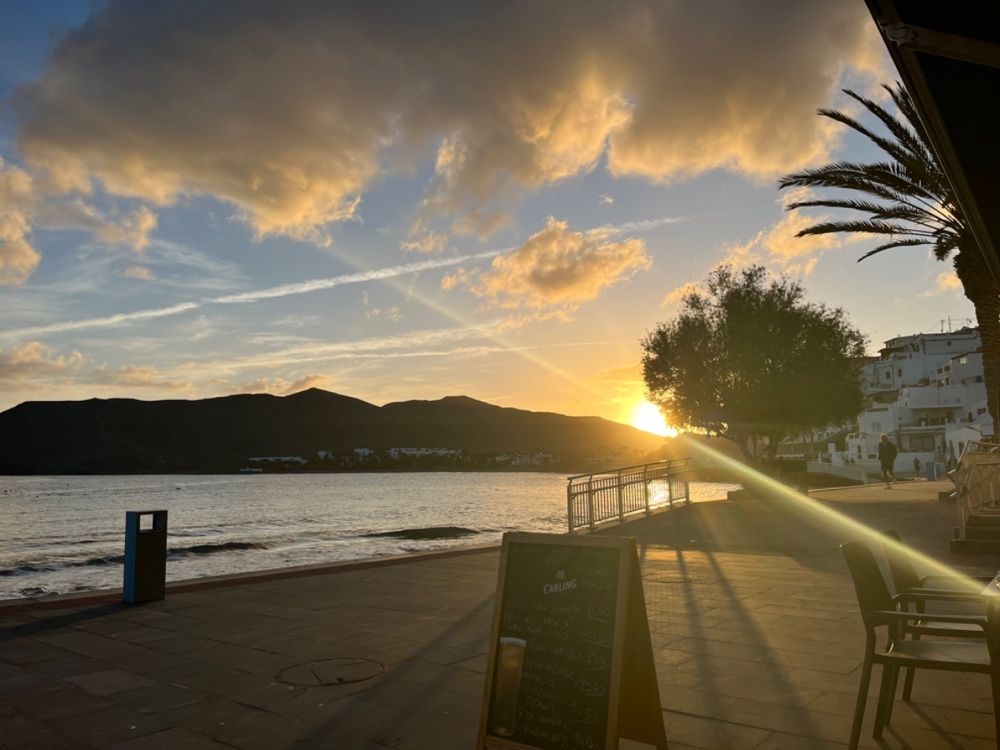
We found it by coincidence, as we planned to visit Costa Calma, but the bus ride was endless, so we just got off here. Sometimes, by accident you found the best possibilities. Like in life too.
Don’t you think?
Some other beach resorts you might consider to stay or visit in the south of the island: Costa Calma (Sotavento beach) , Gran Tarajal, La Pared (remote surfing paradise on the west coast)
Sun, Sand, and Sea: Famous Beaches to Visit
In comparison to beaches in Lanzarote, Fuerteventura offers much more sandy beaches.
Playa de Sotavento is where endless sands meet the thrill of kitesurfing. This beach is a favourite for water sports enthusiasts, offering breezy conditions that are perfect for sailing across the waves or watching colorful kites dance in the sky.
However, on a on windless day, this beach is a pure beauty for regular beach day. If you arrive with the car, stop first at Mirador del Salmo for perfect pictures, and then drive slowly down to find a parking spot.
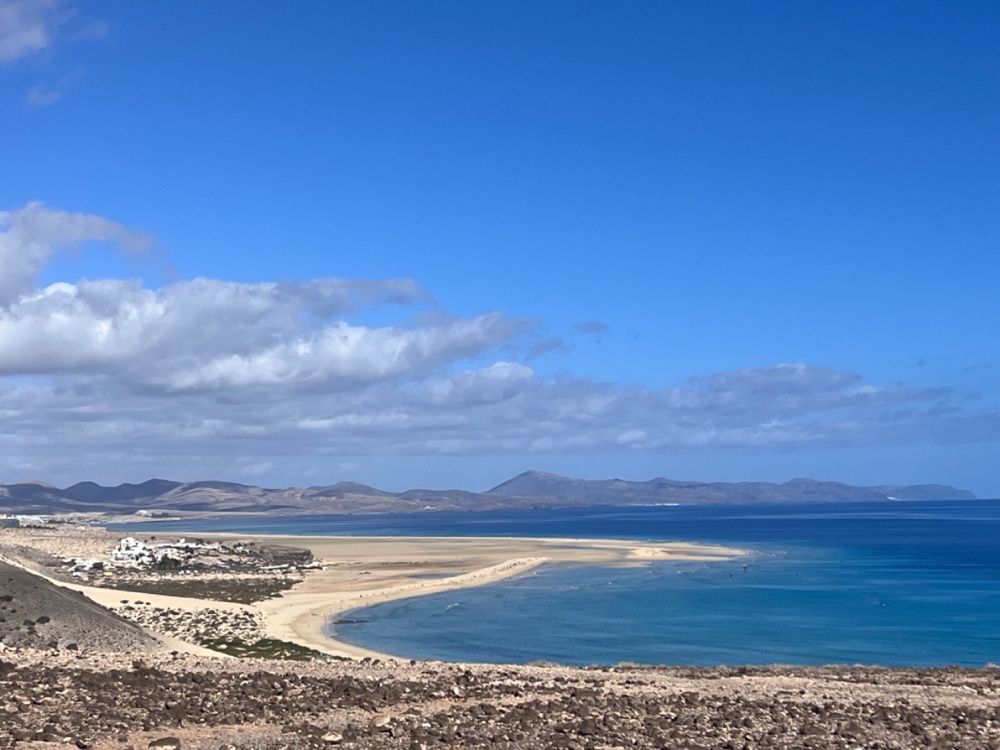
Cofete Beach is the definition of remote beauty. Untouched and wild, it’s a stretch of paradise for those craving solitude. It’s one of those spots where nature rules, and you won’t find sun beds lined up on the shore.
Tip:This beach can be reached only via an off-road path, so not suitable for majority of cars. If you didn’t rent 4×4, I wouldn’t risk driving it, and receiving fine. The rental agencies are quite strict about it. If you want to visit it without car, there is a bus departing from Morro Jable. its 45 minutes and it goes 3 times a day, costs are below 6 euros for return ticket.
La Concha in El Cotillo offers calm waters and gentle waves. Beautiful white sand and amazing sunsets. It’s also suitable for kids.
El Cotillo is the city beach of El Cotillo .Small, yet never too crowded. A bit more rocky than La Concha and also less suitable for swimming, but still it does fulfil the purpose of a chill day in the sun.
Playa del Castillo is the beach left from bus stop in El Cotillo. It is raw, wavy (ideal for surfers) and wild beach located just down off a huge cliff. That’s why there are plenty of camper vans, waiting to catch the perfect wave, or sunset picture.
If you are coming with the dog its perfect place as well. If with the kid, you might want to choose different place.
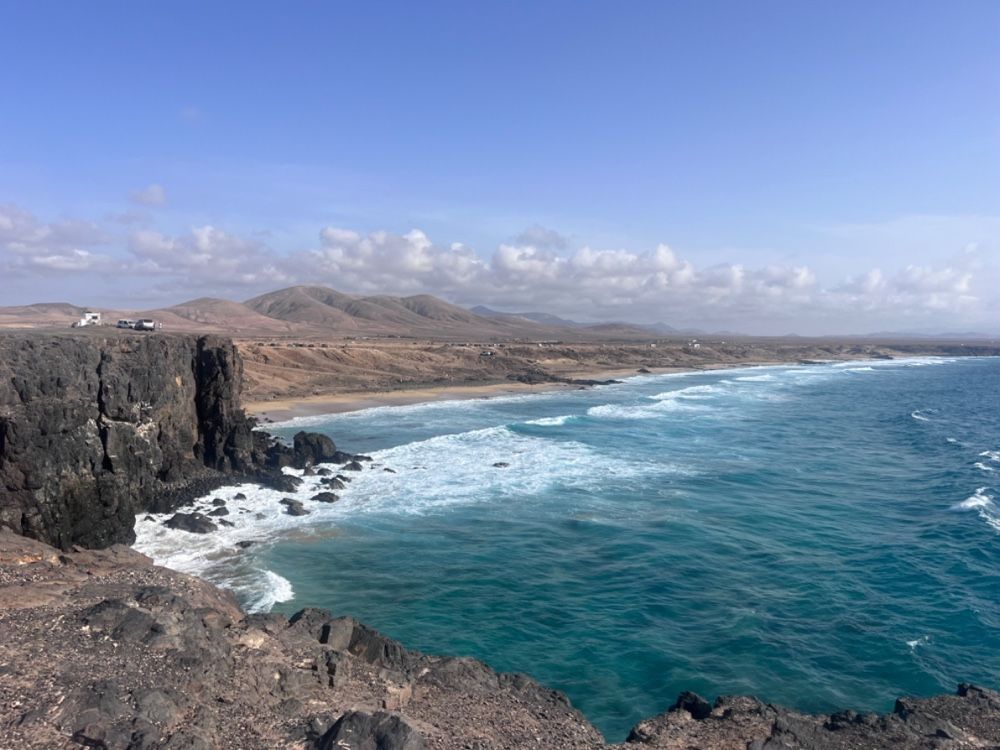
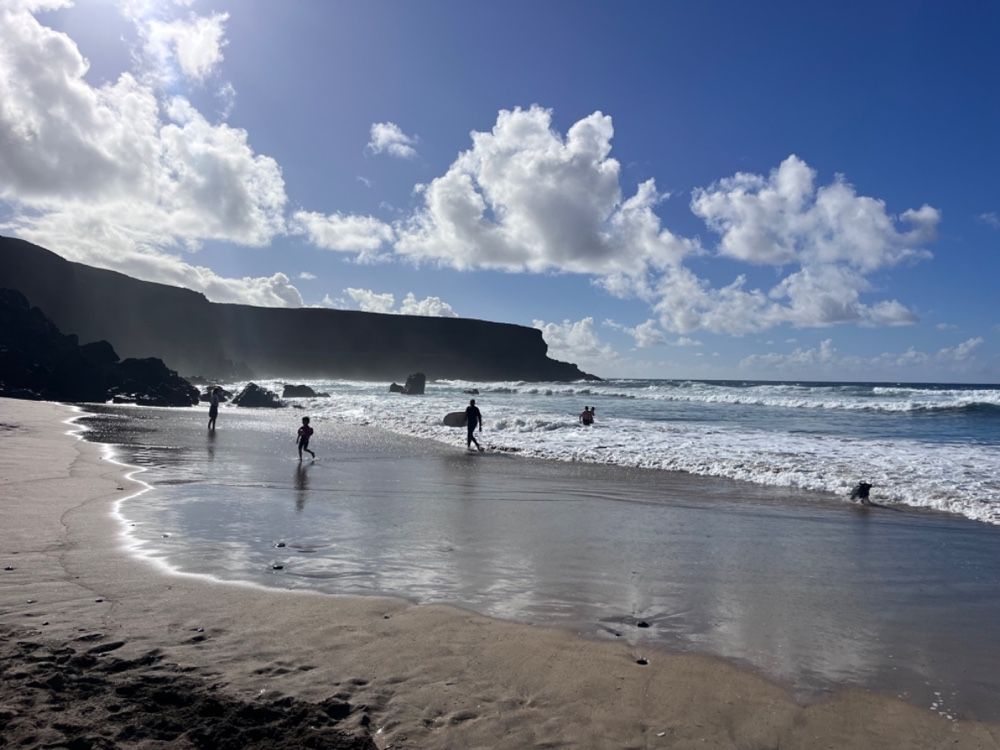
Furthermore, If you love this beach, and you have time, consider walking further away from the El Cotillo. You will come across Esquinzo and Escalera (below on picture).
Those are even more remote beaches with similar vibe than Castillo.
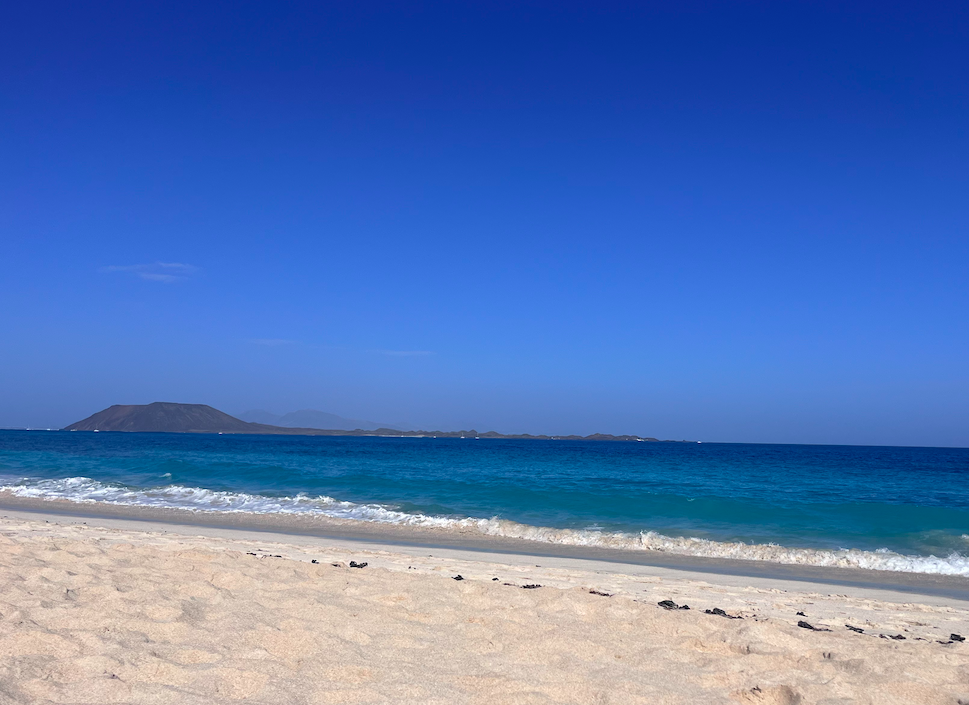
Grande Playas de Corralejo offers sweeping views of rolling dunes meeting turquoise waters. It’s the island’s postcard beach, buzzing with energy and providing ample space to spread out even on busy days. I would recommend the north part especially Viejo, or the southernmost part, Playa Alzada, as those places offer a bit more solitude. Because of its length you’ll be fine anywhere though.
With its proximity to Morro Jable, Playa Jandia is an expansive stretch of silvery sand where the ocean seems endless. It’s great for long walks or finding your own spot to lounge and soak up the sun. If you like a beach hike from the mirador(restaurants side) to the lighthouse (at the start of the national park) , it will take you some 50 minutes.
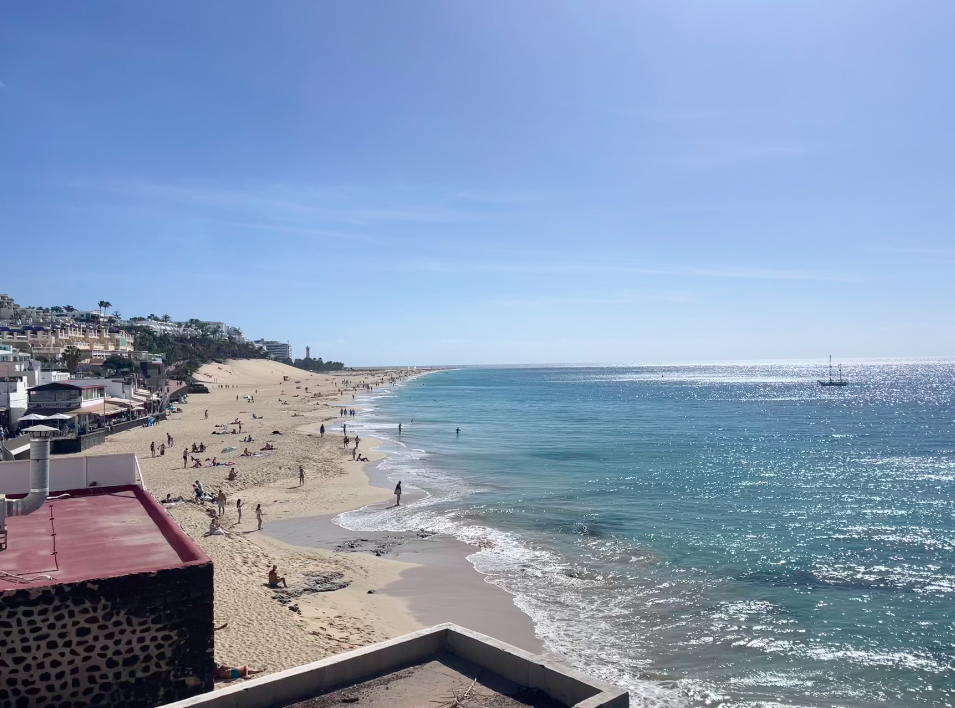
View on the playa Jandia from little church in Morro Jable. Amazing for sunsets too.
See this post for more beaches, pictures and details. (link)
Travel Tips: Best Times to Visit & Essential Considerations
Weather on Fuerteventura is pretty much year-round sunny, with temperatures rarely dipping into anything you’d call cold. Making it the perfect winter getaway, and thus from December to February, you will feel here like you are in paradise, especially if your hometown has temperatures around zero degrees.
From my personal experience, March and October could be the months with the biggest amount of rainfall. But, you need to see it like this, when it rains, it’s one-two hour max and then it’s over. However, in March it could be a bit cloudier than February.
For the balance between warm sunshine and not-too-busy beaches, the shoulder months like April to June or September to November are also great options.
With its climate it might come as no surprise that the summer months July-August are considered as low season for the locals. If you want to experience super low car rental prices, accommodation prices and empty beaches, this is your time to visit.
Things I wish I knew before coming To Fuerteventura?
- The wind is the deciding factor for almost everything. If you plan to visit beaches, plan it wisely where you go. Good thing is that if it is windy at west coast, east coast will have mostly favourable wind direction for beach day. Vice verse too, obviously.
- There is Calima, sand storm that comes regularly, bringing sand cloud, that makes the visibility very limited and brings danger too.
- Locals are very friendly, more than in neighbouring Lanzarote, or any other main Canary Island.
- You can pay only with cash on the bus.
- Compared to Lanzarote there are only few teleclubs, or wineries (Conatvs is the only one, its in Lajares). Those spectacular experiences adding extra local vibe and are missed in Fuerteventura.
- Surfing isn’t easy as it look like. I always had in mind, that surfing is activity you can manage within weeks. After trying it, and talking to locals and instructors alike, it can takes months or years to become surfer.^