The short answer is yes, you can travel the Canary Islands without a car, but the experience varies dramatically by island.
The longer, honest version is a bit complex.
I traveled all four main islands without a car, and this is what actually works, what doesn’t, and which island suits which type of traveler.
Introduction
Traveling the Canary Islands without a car isn’t always straightforward, but it’s definitely possible.
I learned this on my first trips to Lanzarote and Fuerteventura, when I relied mostly on buses and the occasional taxi.
At first, it felt a bit limiting.
Schedules didn’t always match my plans, and some places seemed almost unreachable.
But over time, I learned the rhythm and adjusted my expectations. Coming from the Netherlands, where every connection is on time and frequent, I had no other option.
Instead of trying to see everything, I focused on fewer places, stayed longer, and planned more carefully.
And in a way, that changed how I experienced the islands.

Can You Travel the Canary Islands Without a Car?
Public transport exists on all major islands, and it connects the main towns and tourist areas. You can reach many places without driving.
However, if you want to explore hidden beaches, remote villages, or mountain viewpoints, you will feel limited.
For me, the experience became less about “seeing everything” and more about choosing what actually matters.
One note: if you are a Canary Islands resident, you can use public transportation for free. For all the other ones, there are various discounts available. Those discounts differ per island. See the discounts and much more below.
Canary Islands Without a Car: My Experience in Fuerteventura
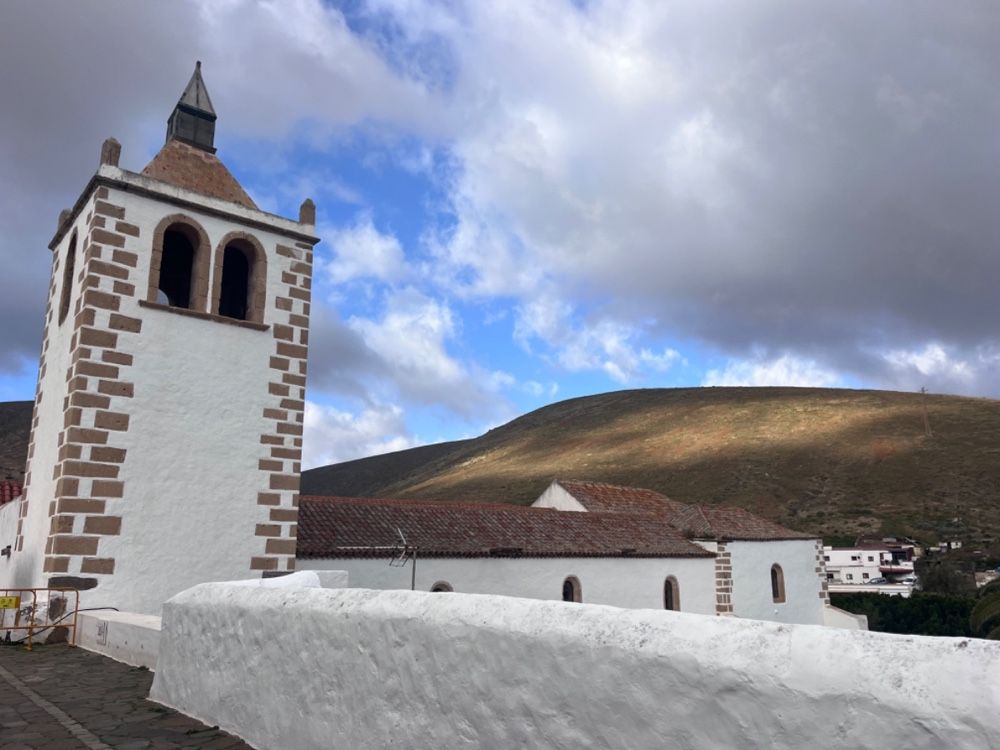
Fuerteventura is the island where traveling without a car is the most difficult and most unpredictable.
Buses connect the main locations, Corralejo, El Cotillo, Puerto del Rosario, and Morro Jable, but options are very limited outside those routes.
A few things that make the Fuerteventura bus experience unique:
- You need cash to pay for buses; card payment isn’t allowed. Also, if you have the discounted travel card (10% off every ride; you can get it from the Cabildo office), you still need cash to apply the discounted fare.
- One note on the discounted card, called the BtF card. While the official bus company website, tiadhe.com, says it’s pretty easy to applyfor and get the card,the reality is different. I tried calling the office several times, but had no luck. If you’re on the island, visiting in person is more likely to work. See the official site of cabildo.es for more information.
- Some buses run less frequently than expected. For instance, El Cotillo-Corralejo: the bus goes only once an hour and is almost always full(mainly the buses between lunchtime and 6 pm)
- Delays are very common; for comparison, Dutch people expect buses and trains to be on time, while Majoreros (local inhabitants of Fuerteventura) expect buses to be late; that’s the reality.
I remember waiting for a bus between Corralejo and El Cotillo, and it simply didn’t show up. Although I was shocked at first that this was possible, I learned to be more patient as a side effect of this inconvenience.
This has also a positive side: the island itself encourages slower travel.
One last thing worth mentioning: hitchhiking is very common and popular.
During my first stay, I lived in Villaverde. It’s a small village between Corralejo and El Cotillo.
One day the bus was already 45 minutes late, so I hitchhiked.
Since the car ride to Corralejo is 15 minutes, about half the bus journey, I saved at least an hour, plus the cost of the bus.
Canary Islands Without a Car: My Experience in Lanzarote

Lanzarote felt the most manageable without a car. Unlike Fuerteventura, you can pay by card on every bus.
The bus network is generally more comprehensive and time-reliable. Buses experience delays, but they’re much less frequent and shorter.
It’s also easier to move between key areas like Arrecife, the airport, Playa Blanca, and Costa Teguise.
I used buses regularly, especially for airport transfers and moving between towns.
Still, there are some limitations.
Places like La Geria (the wine region) or more remote northern areas, think Famara (not accessible at all) or Orzola (port to La Graciosa) , have only a few buses per day and are difficult to reach without a car.
So while Lanzarote is more accessible overall, you still need to accept that some spots will remain out of reach.
The company that operates the bus network on Lanzarote is Arrecifebus, and it also offers a bono card with 10% discounted rates. As you can read on the site, it’s more organized than Fuerteventura.
Canary Islands Without a Car: My Experience in Gran Canaria

Bus connections in Gran Canaria is (surprisingly) good in the south. I stayed in Patalavaca, and the frequent bus connections between southern beaches were better than I expected.
Las Palmas, the airport, and Puerto Mogan are all reachable with buses that run approximately every 15 minutes.
Of course, places like Agaete, Pico de la Nieves, or Tejeda in the middle of the island are harder to reach, about 3 hours from the airport.
It still is possible, though.
Because of its round shape, it almost feels like there’s nowhere you can’t reach by bus in Gran Canaria.
I rank it below Lanzarote because we experienced an unannounced strike. Normally, I wouldn’t mention it, but in this case, because the bus ran on an infrequent route, it cost us half a day. Also, if this happened to us on this route, I believe it could happen elsewhere on the island.
This didn’t happen in Lanzarote during my 5 visits over 4 years.
As for the bus company specifically, it is called Guagasglobal, and the discounts for non-residents are almost non-existent. There is one card that offers a discount based on how much money you top up. However, you also have to fill out the form in advance. The official website doesn’t clearly state the card’s points. For me, it looks like too much hassle for the small discount.
Buses are clean, modern, and accept credit, debit, or contactless cards as well as cash.
Canary Islands Without a Car: My Experience in Tenerife
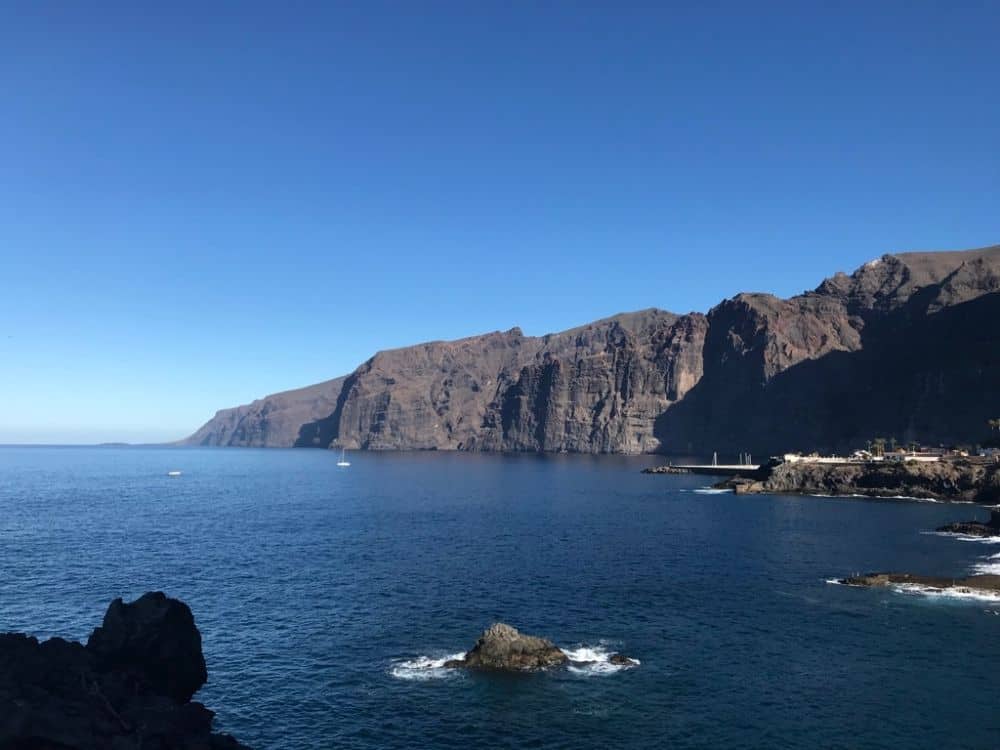
Tenerife is very similar to Lanzarote. Tourist areas have very good connections, but it is harder to reach smaller villages in the middle of the island.
To help you understand what I mean. There is a convenient bus connection from Los Gigantes (south of the Island) to the Tenerife North Airport. It is 120 km, and you can make it in 2 hours with 2 buses.
A 50 km trip to the middle of the island will take 2.5 hours and requires 4 buses.
Generally speaking, if you don’t plan to visit every corner of the island, you will be fine. The buses are modern and reliable, and you can pay by card on the board.
They will take you safely and relatively efficiently anywhere along the coast, north and south, and to both airports.
The company operating the buses is called Titsa. While they offer several discounted rates, they don’t have a 10% discount card like Lanzarote or Fuerteventura.
The discounts mainly focus on multi-day travel. One difference from the other islands is that you can download the Movil app and pay online for your journey.
Canary Islands Without a Car:Travelling Between Islands
One of the easiest ways to move between islands is by ferry.
For example:
- Corralejo (Fuerteventura) to Playa Blanca (Lanzarote) takes about 30 minutes and costs 17 €.
I unexpectedly took this route once, and it turned out to be one of the more relaxed parts of the trip.
Arriving by sea slows the pace.
Other connections between the main islands exist too, but they’re timely and pricey. I would consider them only if you want to transfer by car, motorbike, or van.
Just for an idea, the ferry times:
- Tenerife – Fuerteventura: 4.5 hrs from 100 €
- Tenerife – Lanzarote: 10 hours from 130 €
- Tenerife – Gran Canaria: 1.5 hours from 50 € (only one I would consider as a foot passenger)
Specific category are the smaller islands, which are beautiful and reachable by ferry only:
- Orzola (Lanzarote) – Caleta (La Graciosa) 45 minutes and 17 €
- Corralejo (Fuerteventura) – Lobos Island 10-20 minutes depending on the boat size and 17 €
Flights between islands are also available and often surprisingly affordable. For example, we flew from Tenerife North Airport to Lanzarote in 45 minutes for less than € 50 per person.
Practical Tips for Travelling Without a Car
If you decide not to rent a car, these tips will make a big difference:
1. Choose your location carefully
Stay in places with good connections:
- Corralejo or Puerto del Rosario (Fuerteventura)
- Costa Teguise or Playa Blanca (Lanzarote)
- Los Gigantes or Puerto de Santiago (Tenerife)
- Patalavaca or Santa Brigida (Gran Canaria)
2. Stay longer in one place
Moving less often reduces stress and gives you more time to actually experience a place.
Plus, you can feel, experience, and immerse yourself in the place fully, rather than rush into a new place.
3. Plan loosely, not perfectly
Buses don’t always run on time, so build flexibility into your day. This will also help you learn to stay more patient and appreciative.
4. Use taxis when needed
Sometimes, a short taxi ride saves hours of waiting. I once took a taxi from Corralejo to Lajares because the bus we should take was full (yeah, this happens more than you would think). As we were four and the taxi was 15 €, I paid almost the same price as the bus ride. The next bus was departing in one hour; it was a no-brainer.
Another example: we once took a taxi from Las Playitas to Gran Tarajal, and it made the day much easier. We paid 10 € for a 10-minute drive.
5. Accept what you won’t see
This was the biggest shift for me.
Once I stopped trying to reach every location, traveling without a car became much more enjoyable.
When You Should Rent a Car
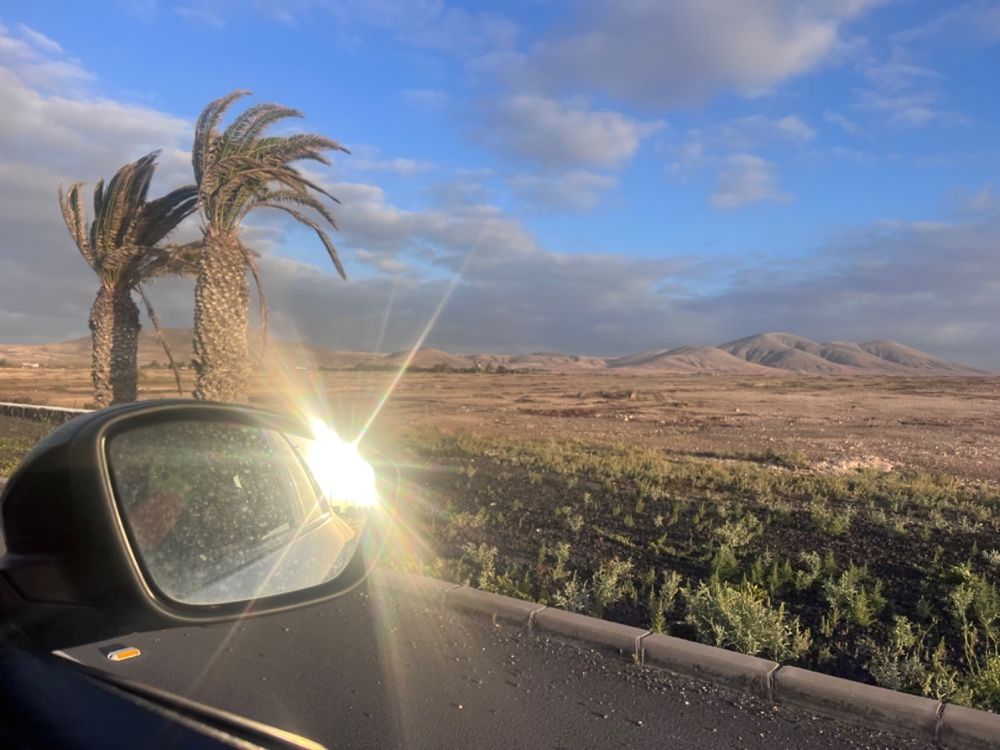
Despite everything above, renting a car is the better choice in some situations. Think of visiting remote beaches and covering multiple locations in a short time, or wanting full flexibility in general.
On every Canary Island, rental prices are often very reasonable, and because of the high quality of roads, also driving is quite safe and enjoyable.
Canary Islands Without a Car: Final Thoughts
For me, traveling the Canary Islands without a car is about experiencing the destination differently.
For some, it can feel slower, less efficient, and sometimes unpredictable.
But it can also be more intentional.
For me, it meant spending more time in fewer places, noticing more, and rushing less.
Should you decide to rent a car, the Canary Islands are a good place to do it. I enjoyed driving in Lanzarote and Fuerteventura thanks to the high-quality roads, less traffic, and plenty of roundabouts.
Tenerife and Gran Canaria felt busier to me, with some dangerous roads, and hence I opted for less rush and chose the bus.